
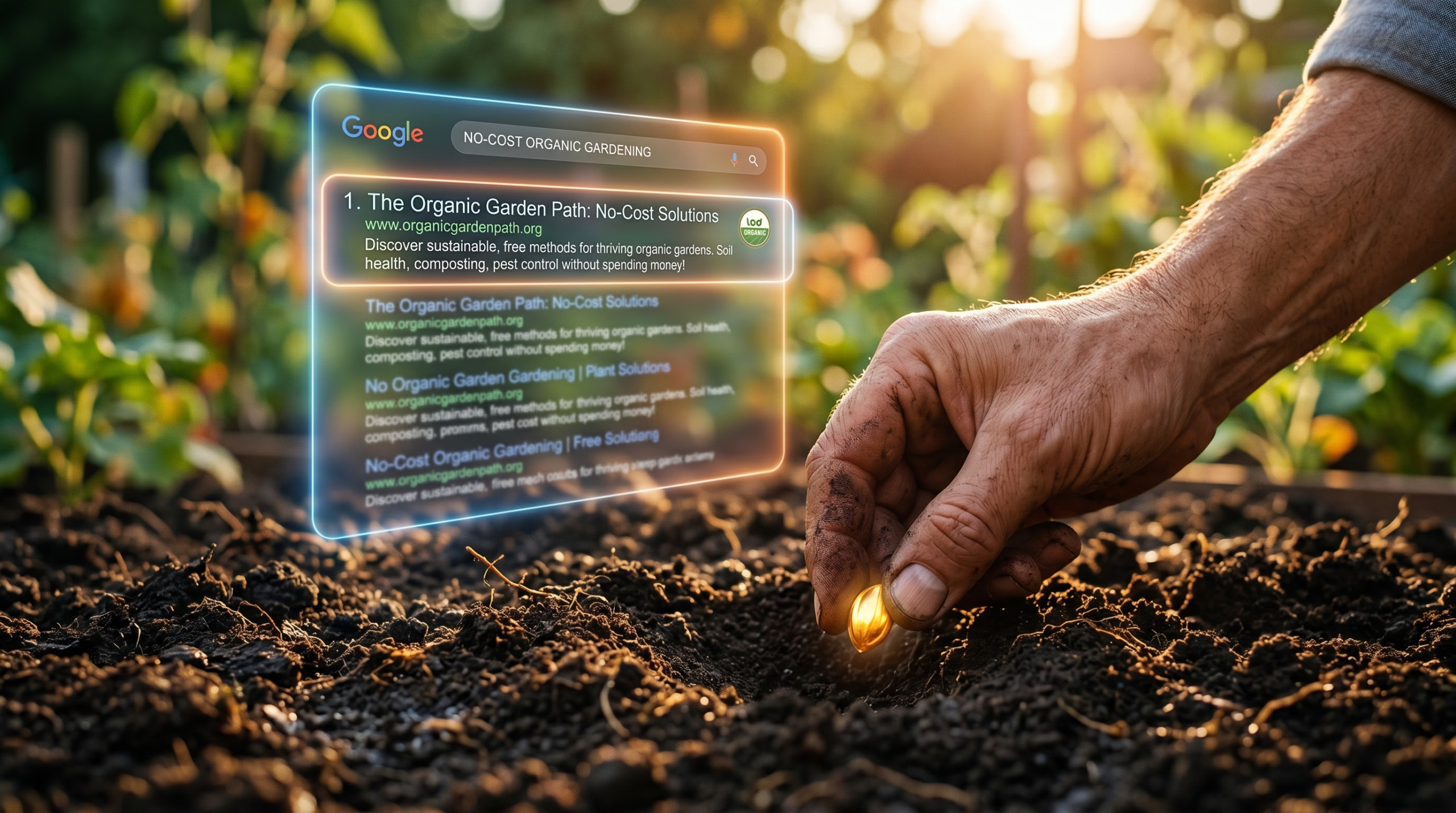
Organic visibility remains one of the most powerful ways to grow a website. Even in 2026, organic search continues to drive more than half of website traffic for many businesses, making it the largest traffic channel on the web. Studies show that organic search accounts for around 53% of total website traffic, while top-ranking pages receive the vast majority of clicks.
The challenge is that search has changed. AI-generated answers, featured snippets, and zero-click searches have made competition tougher than ever. Yet the opportunity is still massive for website owners who understand how modern SEO works. Instead of spending thousands of dollars on ads, you can build a sustainable source of traffic that keeps bringing visitors month after month.
Article Outline
Understanding Organic Visibility
Organic visibility is simply how often your website appears in unpaid search results. Think of Google as a giant shopping mall and your website as a store. If your store is hidden in a dark corner, very few people will visit. If it is located near the main entrance, thousands of people may walk through the door every day.
Search engines evaluate millions of pages to determine which ones deserve top rankings. They look at content quality, relevance, user experience, authority, and technical performance. Websites that consistently satisfy users tend to climb higher in search results.
Many website owners assume that ranking well requires a huge budget. The truth is that some of the biggest ranking factors cost nothing except time and effort. High-quality content, smart internal linking, proper optimization, and a clear understanding of search intent can often outperform expensive marketing campaigns.
The beauty of organic visibility is that it compounds over time. One strong article can continue generating traffic for years. Unlike paid advertising, where traffic stops the moment you stop spending money, organic traffic keeps flowing.
Why Organic Traffic Still Matters in 2026
The SEO landscape has changed dramatically. AI Overviews and zero-click searches have reduced click-through rates for many websites. Research suggests that roughly 60% or more of searches may end without a click because users receive answers directly in search results.
That sounds discouraging at first. However, there is another side to the story. Organic search still drives over half of website traffic globally. Businesses continue investing heavily in SEO because it remains one of the highest ROI marketing channels available.
The websites winning today focus less on gaming algorithms and more on providing genuine value. Search engines have become much better at identifying expertise and usefulness. If your content helps users solve problems better than competitors, you still have a strong chance of ranking.
Organic traffic also builds trust. People naturally trust search results more than advertisements. When someone discovers your website through a helpful article, they often view your brand as an authority. That trust can translate into subscribers, customers, and long-term loyalty.
Building a Strong SEO Foundation
Before chasing rankings, you need a solid foundation. SEO is like constructing a house. Without a strong base, even the most beautiful structure will eventually collapse.
The first step is understanding search intent. Search intent refers to the reason behind a user’s query. Are they looking for information? Comparing products? Ready to make a purchase? Your content must match what users expect to find.
For example, if someone searches “best budget laptops,” they want recommendations and comparisons. If they search “how to clean a laptop keyboard,” they want instructions. Giving users the wrong type of content makes rankings difficult.
Another key element is keyword selection. Many beginners target extremely competitive keywords and become frustrated when they fail to rank. A smarter strategy is focusing on specific, long-tail keywords that have lower competition but clear search intent.
These keywords may attract fewer searches individually, but collectively they can drive significant traffic. More importantly, they often convert better because the searcher’s needs are highly specific.
Creating Content That Google Loves
Content remains the heart of SEO. No amount of optimization can compensate for weak content. Search engines want to provide the best answers, which means your content must be genuinely useful.
Start by researching the questions your audience is asking. Forums, social media groups, comment sections, and keyword research tools can reveal valuable insights. Build content around real problems instead of guessing what people want.
Every article should aim to be the most helpful resource available. This does not necessarily mean writing the longest article. It means covering the topic thoroughly, clearly, and accurately.
One powerful strategy is building topical authority. Rather than publishing random articles, focus on a specific niche. Create interconnected content covering multiple aspects of the same subject. Over time, search engines begin recognizing your website as an authority in that area.
For example, if your niche is fitness, publish content about workouts, nutrition, recovery, supplements, and training plans. Connect these articles through internal links. This approach helps both users and search engines understand your expertise.
Creating Content Clusters
Content clusters have become increasingly important. A content cluster consists of a main pillar page supported by multiple related articles.
Imagine your pillar page covers “Digital Marketing.” Supporting articles could discuss SEO, email marketing, content marketing, social media strategies, and analytics. Each article links back to the pillar page and to related content.
This structure creates a web of relevance that search engines love. It also encourages visitors to explore multiple pages, increasing engagement and reducing bounce rates.
Content clusters help distribute authority throughout your website. When one page earns backlinks or gains visibility, related pages can benefit as well.
Over time, this strategy can transform a small website into a recognized authority within its niche without spending a single dollar on advertising.
On-Page SEO Techniques
On-page SEO is one of the easiest areas to improve because you have complete control over it. Small changes can often produce noticeable results.
Your title tag is one of the most important ranking elements. It should include your target keyword while remaining compelling enough to attract clicks. Remember that rankings alone are not enough. People must actually choose your result.
Meta descriptions also play a role. Although they may not directly influence rankings, they can improve click-through rates by encouraging users to visit your page.
Research consistently shows that top positions receive significantly higher click-through rates than lower rankings. Position one often captures a large share of all clicks.
Use keywords naturally throughout your content. Avoid keyword stuffing. Search engines are sophisticated enough to understand context and related terms.
Optimize images by using descriptive file names and alt text. This improves accessibility while creating additional opportunities to appear in image search results.
Using Internal Links Strategically
Internal linking is one of the most overlooked SEO tactics. Yet it costs nothing and can significantly improve visibility.
Internal links help search engines discover and understand your content. They also guide users toward related information, improving the overall experience.
Think of internal links as roads connecting different parts of your website. Without roads, visitors struggle to move around. With a well-designed network, navigation becomes seamless.
When adding internal links, focus on relevance. Link pages that genuinely complement each other. Use descriptive anchor text that explains what users can expect after clicking.
A strong internal linking strategy can help distribute authority, improve crawlability, and increase page views across your website.
Technical SEO Without Paying Anything
Technical SEO sounds intimidating, but many improvements are surprisingly simple.
Website speed is a major factor. Users expect pages to load quickly. Slow websites frustrate visitors and may hurt rankings. Compressing images, removing unnecessary plugins, and using lightweight themes can improve performance.
Mobile optimization is equally important. Most searches now occur on mobile devices. A website that looks great on desktop but performs poorly on smartphones is at a significant disadvantage.
Here is a quick comparison of important technical factors:
| Factor | Why It Matters |
|---|---|
| Page Speed | Improves user experience and rankings |
| Mobile Friendliness | Essential for modern search traffic |
| HTTPS Security | Builds trust and supports rankings |
| Clean URLs | Easier for users and search engines |
| XML Sitemap | Helps search engines discover pages |
Fortunately, many free tools can identify technical issues and suggest improvements.
Leveraging AI Search and Modern SEO
The rise of AI-powered search has changed SEO forever. Websites must now optimize not only for traditional rankings but also for AI-generated answers.
Recent studies show that AI Overviews can significantly reduce click-through rates when they appear in search results.
Instead of fighting this trend, smart publishers adapt. Create clear, structured content that directly answers common questions. Use headings, concise explanations, and well-organized information.
AI systems often prefer content that is easy to understand and verify. Demonstrating expertise, citing reliable sources, and maintaining accuracy can improve your chances of being referenced.
Featured snippets represent another opportunity. These highlighted search results often appear above standard listings. Content that answers questions clearly and directly has a better chance of earning these valuable positions.
The goal is no longer simply ranking first. The goal is becoming the most useful source of information.
Building Authority Naturally
Authority remains one of the strongest ranking signals. The good news is that you do not need to buy backlinks or engage in risky tactics.
Focus on creating resources people genuinely want to reference. Original research, detailed guides, case studies, and unique insights naturally attract links over time.
Guest posting can also be effective when done correctly. Contribute valuable content to reputable websites within your niche. Build relationships instead of chasing links.
Social media can amplify your reach. While social signals may not directly influence rankings, increased exposure can lead to more visitors, mentions, and backlinks.
Community engagement is another underrated strategy. Participate in discussions, answer questions, and help people solve problems. Over time, this builds trust and increases awareness of your website.
Authority grows slowly, but its impact can be enormous.
Tracking and Improving Results
SEO without measurement is like driving with your eyes closed. You need data to understand what is working.
Several excellent free tools can help:
- Google Search Console
- Google Analytics
- Google Trends
- Google Keyword Planner
- Bing Webmaster Tools
Monitor metrics such as impressions, clicks, click-through rate, and average position. Look for pages gaining visibility and identify opportunities for improvement.
One surprising fact is that a large percentage of web pages receive little or no organic traffic. This highlights the importance of consistent optimization and quality content creation.
SEO success rarely happens overnight. Think of it as planting a tree. You water it regularly, provide sunlight, and remain patient. Eventually, it grows strong enough to produce lasting results.
Conclusion
Skyrocketing your organic visibility without spending money is absolutely possible. The process requires patience, consistency, and a willingness to focus on fundamentals rather than shortcuts.
Create content that genuinely helps people. Understand search intent. Build topical authority. Optimize your pages. Improve technical performance. Adapt to AI-driven search. Earn trust through expertise and value.
Organic search remains one of the most powerful traffic sources available today. While the landscape continues evolving, the core principle remains unchanged: websites that provide the best experience and the most useful information tend to win.
Instead of chasing every new SEO trend, focus on becoming the best answer to your audience’s questions. Do that consistently, and your visibility can grow far beyond what paid advertising alone could achieve.
FAQs
1. How long does it take to improve organic visibility?
Most websites begin seeing noticeable improvements within 3 to 6 months, though highly competitive niches may require longer.
2. Can I rank on Google without buying backlinks?
Yes. High-quality content, strong internal linking, and natural authority building can help you rank without purchasing backlinks.
3. Is SEO still worth it in 2026?
Absolutely. Organic search still drives a significant share of web traffic despite the growth of AI-generated search experiences.
4. What is the most important SEO factor?
Content quality and search intent alignment remain among the most important factors for long-term SEO success.
5. How often should I publish content?
Consistency matters more than frequency. Publishing one excellent article per week is often better than publishing low-quality content daily.
Thank you 24

1 thought on “How to Increase Organic Visibility for Free”