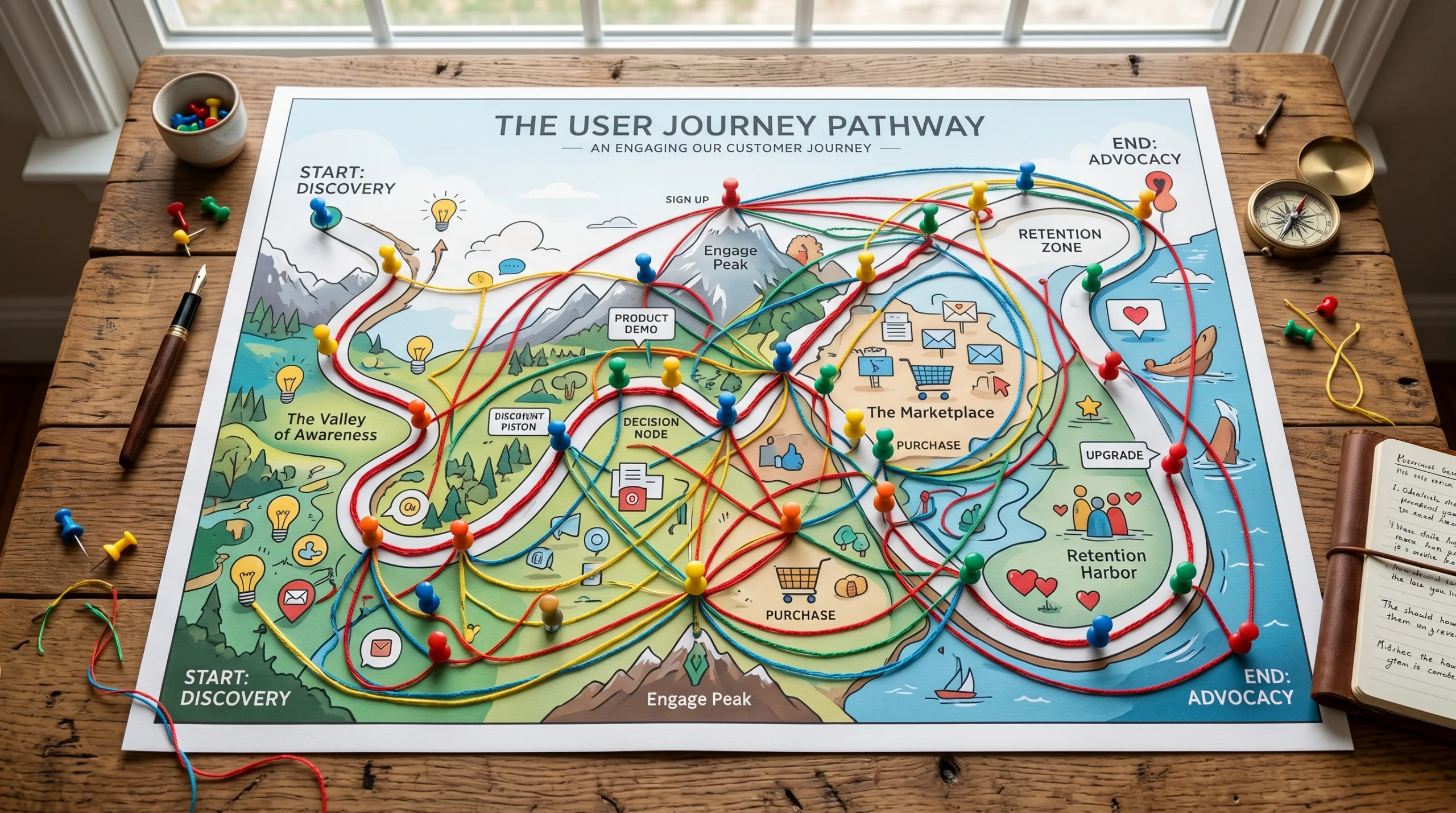
Understanding What Makes a Page “Sticky”
A sticky page is not simply a webpage that attracts visitors. It is a page that convinces those visitors to stay, explore, interact, and eventually take action. Think of your website as a physical store. If someone walks in and immediately walks out, something failed to capture their attention. The same principle applies online. Every second matters because users have countless alternatives only a click away.
Modern website owners often obsess over traffic numbers. While attracting visitors is important, retaining them is where the real value lies. A website receiving 100,000 visitors per month with poor engagement can perform worse than a website receiving 10,000 highly engaged visitors. Sticky pages bridge the gap between traffic acquisition and meaningful interaction. They transform passive visitors into active participants.
Recent industry studies indicate that the average website bounce rate often falls between 41% and 55%, depending on industry and page type. Highly optimized websites consistently achieve significantly lower bounce rates through improved user experiences and stronger content relevance.
The goal is not literally reaching a 0% bounce rate. In reality, some visitors will always leave after viewing a single page. The objective is to create such a compelling experience that the vast majority of users feel motivated to continue their journey through your website.
Table of Contents
The Real Meaning of Bounce Rate
Bounce rate is one of the most misunderstood metrics in digital marketing. Traditionally, it measures the percentage of visitors who leave a website without taking another action. That action might include clicking a link, filling out a form, watching a video, or visiting another page. A high bounce rate often signals a disconnect between user expectations and page experience.
However, context matters. A blog article may naturally have a higher bounce rate because visitors find the information they need and leave satisfied. On the other hand, a product page or SaaS landing page with a high bounce rate can indicate serious conversion problems. Industry benchmarks show blog pages often experience bounce rates between 60% and 80%, while optimized commercial pages frequently remain between 30% and 50%.
Many SEO professionals now focus more heavily on engagement signals rather than bounce rate alone. User satisfaction, session duration, scroll depth, return visits, and conversions often provide deeper insights into content effectiveness. Community discussions among analytics professionals frequently emphasize that bounce rate without context can be misleading.
Instead of viewing bounce rate as the enemy, consider it a diagnostic tool. It helps identify friction points where visitors lose interest, become confused, or fail to find what they expected.
Why Engagement Matters More Than Raw Traffic
Imagine filling a stadium with people who immediately leave after entering. Technically, attendance was high, but the event was not successful. Websites face a similar challenge. Traffic alone does not generate revenue, build trust, or create loyal audiences. Engagement does.
Engaged users spend more time reading content, exploring products, sharing articles, and completing conversions. They develop familiarity with your brand. They become subscribers, customers, and advocates. Every additional minute spent on your site increases the likelihood of a meaningful outcome.
The shift toward engagement metrics has become increasingly important since analytics platforms evolved beyond simple pageview tracking. Modern measurement systems now evaluate interaction quality rather than just visit counts. This evolution reflects a broader understanding that user behavior matters more than surface-level traffic numbers.
A sticky page creates momentum. Each interaction encourages another interaction. One article leads to another. One product recommendation sparks curiosity about related offerings. The visitor becomes invested in the experience, making departure less likely.
This momentum is what separates thriving websites from forgotten ones.
The Psychology Behind User Retention
Understanding user psychology is essential for reducing bounce rates. Human attention operates according to predictable patterns. Visitors arrive with questions, expectations, goals, and emotional states. Successful pages address these factors immediately.
People are naturally drawn toward relevance. Within seconds of landing on a page, users subconsciously ask themselves several questions. Am I in the right place? Does this page solve my problem? Is it worth my time? If the answers are unclear, they leave.
Trust also plays a critical role. Professional design, clear messaging, social proof, and transparent navigation reduce uncertainty. When visitors feel comfortable, they stay longer. When they feel confused, skeptical, or overwhelmed, they exit quickly.
Curiosity acts as another powerful retention mechanism. Humans dislike incomplete information. This psychological tendency explains why cliffhangers work in television shows and why intriguing headlines attract clicks. Strategic content structures can leverage curiosity to encourage deeper exploration without resorting to manipulative tactics.
The most effective sticky pages understand that retention begins with emotion before it transitions into logic. Visitors stay because they feel understood, valued, and interested.
Designing for Instant Connection
Above-the-Fold Optimization
The area visible before scrolling remains one of the most valuable pieces of digital real estate. Within moments of arrival, visitors decide whether a page deserves further attention. A strong above-the-fold experience communicates purpose immediately.
Effective designs feature a compelling headline, concise value proposition, relevant imagery, and a clear call-to-action. Clutter is minimized. Distractions are removed. Every element supports the user’s primary objective.
Think of the above-the-fold section as a movie trailer. Its purpose is not to tell the entire story but to convince viewers that the story is worth watching. Strong visual cues guide attention naturally. Contrasting elements highlight important information. Strategic whitespace prevents cognitive overload.
Many websites fail because they attempt to communicate everything simultaneously. Sticky pages succeed because they communicate the right message at precisely the right moment.
Creating Visual Hierarchy
Visual hierarchy determines how users process information. Without hierarchy, content becomes a wall of text that feels intimidating and difficult to navigate.
Headings, subheadings, spacing, images, typography, and color contrast help organize information into digestible sections. Visitors scan before they read. Clear visual structures accommodate this behavior while encouraging deeper engagement.
A well-designed page functions like a guided tour. Users always know where they are, what comes next, and why it matters. This clarity reduces friction and increases confidence.
When hierarchy is executed effectively, users remain oriented and engaged even within lengthy content experiences.
Content That Keeps Visitors Reading
Writing Irresistible Headlines
Headlines represent the gateway to engagement. Even exceptional content fails if the headline does not capture attention. Effective headlines combine clarity, specificity, relevance, and emotional appeal.
Readers respond to outcomes. They want solutions, insights, advantages, and transformations. Headlines should communicate these benefits clearly while generating curiosity. The best headlines promise value without exaggeration.
For example, compare a generic title like “Website Optimization Tips” to a more compelling title such as “10 Proven Website Optimization Techniques That Double Visitor Engagement.” The second version establishes expectations, specificity, and potential rewards.
Headline optimization should extend beyond article titles. Section headings throughout the page should continuously reinforce interest and encourage continued reading.
Storytelling as a Retention Tool
Stories are among the oldest engagement technologies in human history. Long before websites existed, stories captured attention, transmitted knowledge, and built emotional connections.
Digital content becomes significantly more engaging when information is woven into narratives. Case studies, personal experiences, customer success stories, and practical examples help abstract concepts become memorable and relatable.
Stories create emotional investment. They transform information into experiences. Readers become curious about outcomes, challenges, and resolutions. This curiosity naturally increases time on page.
Using Open Loops to Sustain Interest
Open loops occur when a question or incomplete idea is introduced but not immediately resolved. Television writers use this technique constantly. Content creators can apply the same principle ethically.
For example, introducing a surprising statistic early in an article and promising a detailed explanation later encourages continued reading. The key is delivering genuine value when the loop closes.
Used correctly, open loops create anticipation rather than frustration. They encourage exploration while maintaining reader trust.
Improving Website Speed and Performance
Website speed directly impacts bounce rate. Visitors expect pages to load almost instantly. Every additional second increases abandonment risk. Slow websites create frustration before users even engage with content.
Research consistently shows that performance influences user satisfaction, engagement, and conversion rates. Fast websites feel professional, trustworthy, and enjoyable to use. Slow websites feel outdated and unreliable.
Core Web Vitals have become central performance indicators because they measure real-world user experiences. Metrics such as loading speed, visual stability, and responsiveness provide actionable insights into website quality.
Mobile performance deserves special attention. Mobile traffic now dominates many industries, making mobile optimization essential rather than optional. Responsive design, image compression, efficient code, and modern hosting infrastructure contribute significantly to retention.
A sticky page begins loading before visitors have a chance to reconsider their click.
Strategic Internal Linking
Internal linking remains one of the simplest yet most effective methods for reducing bounce rates. Every relevant internal link creates an opportunity for continued engagement.
Think of internal links as pathways within a theme park. Visitors are more likely to stay when attractive destinations are clearly connected. Effective internal linking introduces related topics naturally without disrupting the reading experience.
Contextual recommendations outperform random suggestions. If a visitor is reading about conversion optimization, links to related topics such as landing page design, user psychology, or A/B testing feel logical and valuable.
Well-structured internal linking also supports SEO by helping search engines understand content relationships. This dual benefit makes it one of the highest-return optimization strategies available.
The objective is simple: ensure users never reach a dead end.
Interactive Elements That Reduce Bounce
Interactive content transforms passive consumption into active participation. Instead of merely reading, users engage directly with the experience.
Popular interactive formats include:
| Interactive Element | Primary Benefit |
|---|---|
| Quizzes | Personalized engagement |
| Calculators | Immediate practical value |
| Polls | User participation |
| Interactive Infographics | Enhanced exploration |
| Videos | Increased time on page |
| Assessments | Customized recommendations |
Interactive tools create investment. Once users begin interacting, they become more committed to the experience. This commitment frequently translates into longer sessions and higher conversion rates.
Video content deserves special mention. Well-placed videos can significantly increase dwell time while accommodating different learning preferences. Some users prefer reading, while others prefer visual explanations. Offering both formats broadens engagement opportunities.
Interactive experiences make websites feel alive rather than static.
Personalization and Dynamic Experiences
Personalization has evolved from a luxury feature into a competitive advantage. Visitors increasingly expect content tailored to their interests, behaviors, and needs.
Behavior-based recommendations exemplify this approach. E-commerce websites suggest related products. Media platforms recommend additional articles. SaaS companies customize onboarding experiences. Each recommendation increases relevance and encourages deeper exploration.
Personalization does not require invasive data collection. Even simple segmentation based on traffic source, location, device type, or browsing behavior can improve user experiences dramatically.
Recent marketing discussions highlight the importance of matching page experiences with visitor intent. When users encounter content that aligns closely with their expectations, bounce rates often decrease while engagement metrics improve.
The future of sticky pages lies in creating experiences that feel individually relevant rather than universally generic.
Measuring Success Beyond Bounce Rate
Modern optimization requires a broader perspective than bounce rate alone. While bounce rate remains useful, it should be interpreted alongside complementary metrics.
Key performance indicators include:
| Metric | What It Reveals |
|---|---|
| Engagement Rate | Quality of user interactions |
| Session Duration | Depth of content consumption |
| Pages Per Session | Exploration behavior |
| Scroll Depth | Content engagement |
| Conversion Rate | Business impact |
| Return Visitors | Audience loyalty |
A page with a moderate bounce rate but exceptional conversion performance may outperform a page with lower bounce rates but poor business outcomes. Metrics gain meaning when evaluated collectively.
The most successful website owners focus on user satisfaction rather than isolated numbers. They continually test, analyze, and refine experiences based on actual visitor behavior.
Sticky pages emerge through ongoing optimization rather than one-time design decisions.
At End
Creating sticky pages is not about tricks, gimmicks, or manipulating analytics. It is about understanding users deeply and designing experiences that genuinely serve their needs. Every element matters, from page speed and visual hierarchy to storytelling, internal linking, personalization, and interactive content.
The reality is that achieving a literal 0% bounce rate is neither realistic nor necessary. Some visitors will always leave after finding exactly what they need. The real objective is maximizing meaningful engagement and creating seamless pathways that encourage continued exploration.
Websites that succeed in today’s competitive digital environment treat every visitor interaction as an opportunity to build trust, provide value, and strengthen relationships. When content aligns with intent, navigation feels effortless, and experiences remain engaging, bounce rates naturally decline.
Sticky pages are not created by accident. They are carefully engineered experiences that transform fleeting attention into lasting engagement.
Frequently Asked Questions
1. What is considered a good bounce rate in 2026?
A good bounce rate varies by industry and page type. Many optimized websites operate within the 25% to 55% range, while content-heavy blogs often experience higher bounce rates naturally.
2. Can a bounce rate ever be too low?
Yes. Extremely low bounce rates may occasionally indicate tracking issues or artificially inflated engagement events. Metrics should always be verified for accuracy.
3. Does bounce rate directly affect SEO rankings?
Bounce rate itself is not confirmed as a direct ranking factor, but user engagement signals often correlate with stronger search performance.
4. What is the fastest way to reduce bounce rate?
Improving page speed, aligning content with user intent, optimizing headlines, and strengthening internal linking often produce the quickest results.
5. Should I focus on bounce rate or engagement rate?
Engagement rate generally provides a more complete picture of user behavior. Bounce rate remains useful, but it should be evaluated alongside other engagement metrics.

1 thought on “Create Sticky Pages That Reduce Bounce Rate”