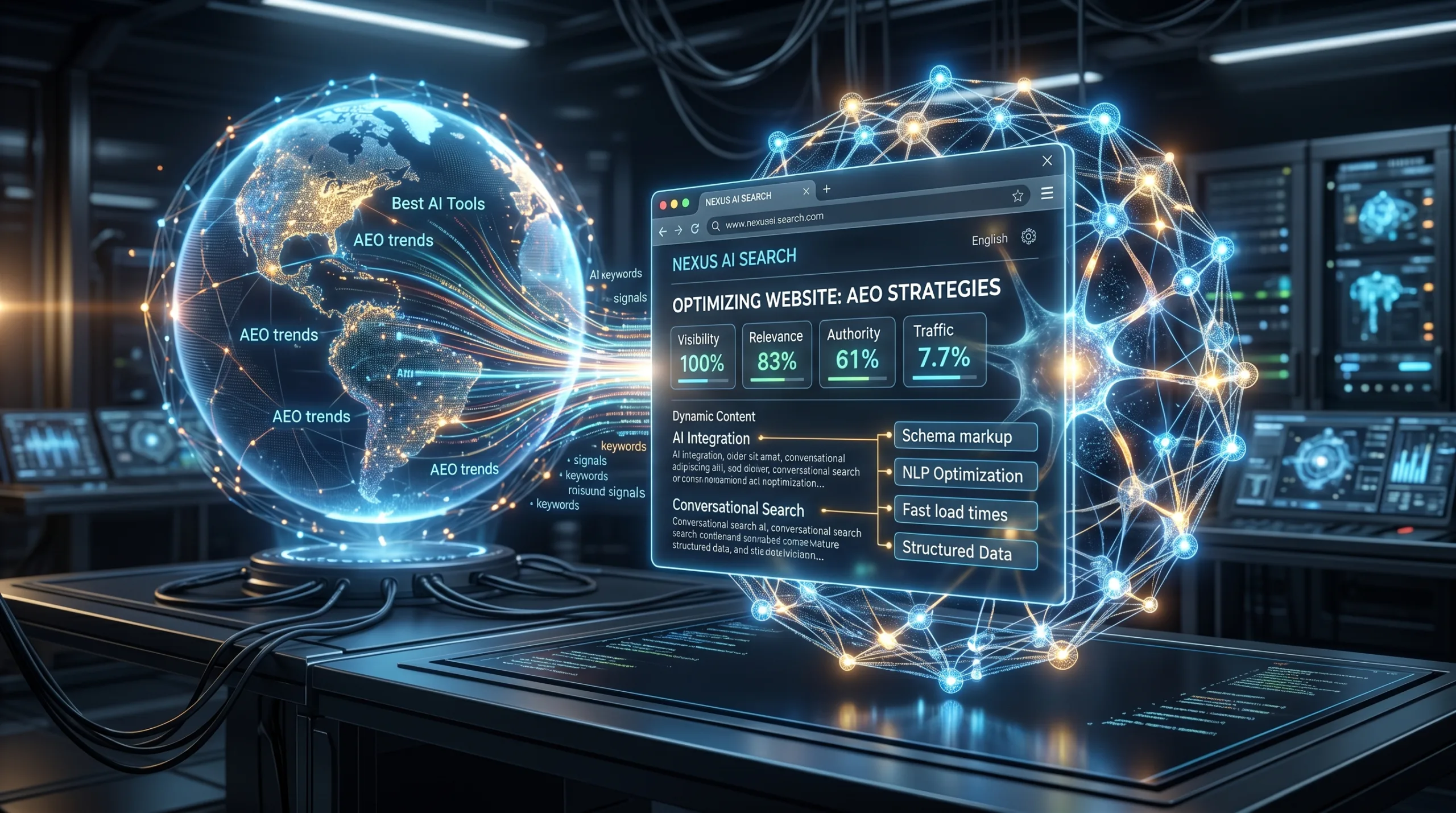
Understanding the Rise of AI Search
Optimize Search is changing faster than many website owners expected. For years, businesses focused almost entirely on ranking in traditional search engines. The goal was simple: reach the first page of Google and attract clicks. Today, users are increasingly turning to AI-powered tools like ChatGPT, Perplexity, Gemini, and AI-powered search experiences to get direct answers instead of browsing multiple websites. This shift has created a new challenge and a new opportunity for website owners.
Unlike traditional search engines that mainly display a list of links, AI search engines generate complete answers. These systems collect information from multiple sources, analyze it, and then provide a summarized response to the user. If your content becomes one of the sources selected by the AI, your website gains visibility even when users never perform a traditional search. AI search optimization is often called Generative Engine Optimization (GEO) because the goal is to increase the chances that AI systems cite, reference, or recommend your content.
Table of Contents
The websites that adapt early have an advantage. AI search is still evolving, and many industries have not yet optimized their content for these platforms. That means businesses willing to learn and implement AI-focused strategies today can build authority before competition becomes even stronger.
Why AI Search Is Different from Traditional Search
Traditional SEO focuses heavily on rankings. AI search focuses more on selection and citation. A page may rank well in Google but still fail to appear in AI-generated answers if the information is difficult to extract or understand. AI systems often evaluate specific content sections rather than entire pages. They look for clear explanations, direct answers, definitions, comparisons, and step-by-step instructions.
Think of traditional SEO as trying to win a race to the top of a mountain. AI search is more like trying to become the expert that everyone quotes during a conversation. Your goal is no longer just visibility. Your goal is trust, clarity, and authority.
How ChatGPT and Perplexity Find Information
Both ChatGPT and Perplexity rely on web content to answer many user questions. Their systems retrieve information from websites, evaluate source quality, and generate responses based on the information they find. Sites that are crawlable, trustworthy, and easy to understand have a greater chance of being cited. Perplexity uses dedicated crawling systems, while ChatGPT Search relies on web retrieval and citation mechanisms that favor accessible and relevant content.
This means website owners must pay attention to both content quality and technical accessibility. If AI systems cannot access your content, they cannot use it. If they can access it but cannot easily understand it, they may choose another source instead.
Why AI Visibility Matters in 2026
AI search is no longer a small trend. It is becoming a major part of how people discover information online. Industry reports indicate that platforms such as ChatGPT and Perplexity handle millions of user interactions every day. Google has also integrated AI-generated summaries into a large portion of search experiences. As more users become comfortable receiving direct answers, businesses must adapt their strategies.
The impact on website traffic is significant. Traditional click-through rates are changing because users often receive answers without needing to visit a website. While this can reduce direct traffic, it also creates a new opportunity. Websites that become trusted sources inside AI-generated responses can build authority, brand recognition, and highly targeted traffic.
| Traditional SEO | AI Search Optimization |
|---|---|
| Focus on rankings | Focus on citations |
| Page-level relevance | Passage-level relevance |
| Keywords are primary | Context and authority are critical |
| Clicks are the main goal | Being referenced is the goal |
| Search engines show links | AI generates answers |
Businesses that ignore AI search risk losing visibility as user behavior continues evolving. Those who embrace it can position themselves as authoritative sources within their industries.
The Foundations of AI Search Optimization
Many people assume AI optimization requires an entirely new strategy. The reality is simpler. Strong AI visibility starts with strong SEO fundamentals. AI systems still depend on websites being accessible, crawlable, and well-structured. Technical SEO remains the foundation upon which everything else is built.
Your website should load quickly, work properly on mobile devices, and avoid technical issues that prevent indexing. Pages should return proper status codes, have clear navigation structures, and include logical internal links. AI systems often prefer websites with organized information architecture because it helps them understand relationships between topics.
Content structure is equally important. AI tools perform best when information is presented clearly. Long walls of text without organization make extraction difficult. Effective AI-friendly pages use descriptive headings, concise introductions, and clearly defined sections. This approach helps both human readers and AI systems locate relevant information quickly.
When building content, imagine you are creating a reference guide rather than simply writing a blog post. Every section should answer a specific question or solve a particular problem. This increases the likelihood that AI systems will select your content when generating answers.
Creating AI-Friendly Content
Content remains the most powerful factor in AI search optimization. AI systems prioritize content that provides value, clarity, and expertise. They are not looking for keyword stuffing or repetitive phrases. Instead, they look for information that genuinely helps users.
One of the most effective strategies is placing direct answers near the beginning of each section. AI systems often retrieve passages rather than entire articles. If your answer appears immediately after a heading, it becomes easier for AI systems to identify and cite. Research on AI SEO consistently shows that extractable content performs better in AI-generated responses.
Write Direct Answers First
When creating content, answer the question immediately before providing detailed explanations. This mirrors how successful AI-generated responses are structured. Readers appreciate quick answers, and AI systems appreciate content that is easy to extract.
Using Structured Question-and-Answer Formats
Question-and-answer formats work exceptionally well for AI search. FAQs, comparison guides, and instructional content provide natural structures that AI systems can interpret. Consider how users phrase questions in ChatGPT or Perplexity. Then create content that directly addresses those questions.
For example, instead of writing a vague section about SEO, create a section titled “How Does AI Search Affect SEO?” and provide a direct answer. This simple adjustment can significantly improve AI visibility.
Build Topical Authority
Topical authority means covering a subject comprehensively rather than publishing isolated articles. AI systems often evaluate whether a website demonstrates expertise across an entire topic. A website with ten high-quality articles about AI SEO may appear more trustworthy than a website with only one article.
Create content clusters that address different aspects of your niche. Link related pages together. Develop guides, tutorials, case studies, and FAQs around the same subject. This interconnected content ecosystem helps AI systems understand your expertise and increases the likelihood of citations.
Strengthening Trust Signals
Trust is becoming one of the most important ranking factors in AI search. AI systems must decide which sources deserve inclusion in their responses. Websites that demonstrate credibility are more likely to be selected.
Expertise can be demonstrated in many ways. Include author information. Showcase industry experience. Reference reputable studies and primary sources. Publish original research when possible. AI systems often favor content supported by evidence rather than unsupported claims.
Brand reputation also matters. Mentions across reputable websites, forums, industry publications, and professional communities help establish authority. AI systems frequently evaluate information beyond a single website. They look for signals that confirm a brand’s legitimacy and expertise. Community discussions on platforms like Reddit and industry-specific sites can contribute to these signals.
Freshness is another important trust factor. Content that includes recent updates is often preferred for rapidly changing topics. AI systems want accurate information. Updating articles regularly helps maintain relevance and increases the likelihood of citations.
Technical Steps for ChatGPT and Perplexity
Technical optimization remains essential for AI visibility. If AI crawlers cannot access your content, even the best article will struggle to appear in AI-generated responses.
One important step is reviewing your robots.txt configuration. Website owners sometimes accidentally block AI crawlers. If you want your content cited by AI search platforms, ensure relevant crawlers have access to your public content. OpenAI and Perplexity both provide guidance regarding crawler accessibility.
Structured data is another valuable tool. While there is no special schema designed exclusively for AI search, standard schema types such as Article, FAQ, Breadcrumb, and Organization help search systems understand your content more effectively. Proper structured data provides context and improves machine readability.
Internal linking also deserves attention. Connect related content logically. Help both users and AI systems navigate your site efficiently. Strong internal links reinforce topical relationships and improve content discoverability.
Measuring AI Search Performance
Optimization is only useful if results can be measured. AI search introduces new metrics that complement traditional SEO tracking.
One approach involves monitoring referral traffic from AI platforms. ChatGPT and other AI systems may pass referral information that can be analyzed within analytics platforms. Tracking these visitors helps identify which content performs well within AI environments.
Another strategy involves manually testing important industry questions. Ask ChatGPT and Perplexity relevant queries and observe whether your website appears in citations. Document results over time and identify patterns. This process can reveal which content types are most effective.
Brand monitoring is equally important. Track mentions across search engines, AI responses, industry forums, and social media. AI visibility often extends beyond direct traffic. A citation in an AI-generated response can influence purchasing decisions even when users never visit your website.
Common Mistakes to Avoid
Many businesses approach AI optimization incorrectly. One common mistake is focusing exclusively on AI while neglecting traditional SEO. Research suggests that strong SEO foundations still contribute significantly to AI visibility. AI optimization should complement SEO rather than replace it.
Another mistake is creating content solely for machines. Some marketers publish overly optimized content that lacks genuine value. AI systems continue improving at identifying useful information. Content designed only to manipulate algorithms often performs poorly.
Avoid publishing thin content. Short articles with limited depth rarely establish authority. Comprehensive, evidence-based content is far more likely to earn citations. Consistency also matters. Publishing one excellent article is helpful, but building a library of authoritative content is far more effective.
The Future of AI Search Optimization
AI search will continue evolving. New models, retrieval methods, and ranking systems will emerge. Despite these changes, certain principles are likely to remain constant: clarity, authority, trust, and relevance.
Research suggests that generative search engines increasingly influence how users discover information online. Studies have found substantial differences between traditional search results and AI-generated responses, highlighting the importance of adapting content strategies for this new environment.
Businesses that invest in expertise, quality content, and technical excellence are positioned to benefit regardless of future algorithm changes. The goal is not to chase every trend. The goal is to become the most trustworthy source within your niche.
Conclusion
Optimizing your website for AI search engines like ChatGPT and Perplexity requires a shift in mindset. Success is no longer defined solely by rankings. It is increasingly defined by whether AI systems trust your content enough to cite it.
The strongest strategy combines traditional SEO fundamentals with AI-focused improvements. Create clear and comprehensive content. Answer questions directly. Build topical authority. Strengthen trust signals. Ensure technical accessibility. Monitor performance regularly and continue refining your approach.
As AI search becomes a larger part of the digital landscape, websites that prioritize quality, expertise, and clarity will have the best chance of remaining visible. The businesses that become trusted sources today will be the ones users—and AI systems—rely on tomorrow.
FAQs
1. What is AI Search Optimization?
AI Search Optimization, often called Generative Engine Optimization (GEO), is the process of improving content so AI platforms like ChatGPT and Perplexity can easily find, understand, and cite it.
2. Does traditional SEO still matter for AI search?
Yes. Strong technical SEO, quality content, and authority signals remain essential foundations for AI visibility.
3. How can I increase my chances of being cited by ChatGPT?
Create clear answers, maintain strong topical authority, allow relevant crawlers, and publish trustworthy content supported by evidence.
4. Is structured data important for AI search?
Yes. Structured data helps machines understand content and relationships, making information easier to process.
5. How do I track AI search traffic?
Use analytics tools to monitor referral sources, track brand mentions, and regularly test relevant prompts on AI platforms.

1 thought on “How to Optimize Your Website for AI Search Engines (ChatGPT & Perplexity)”