
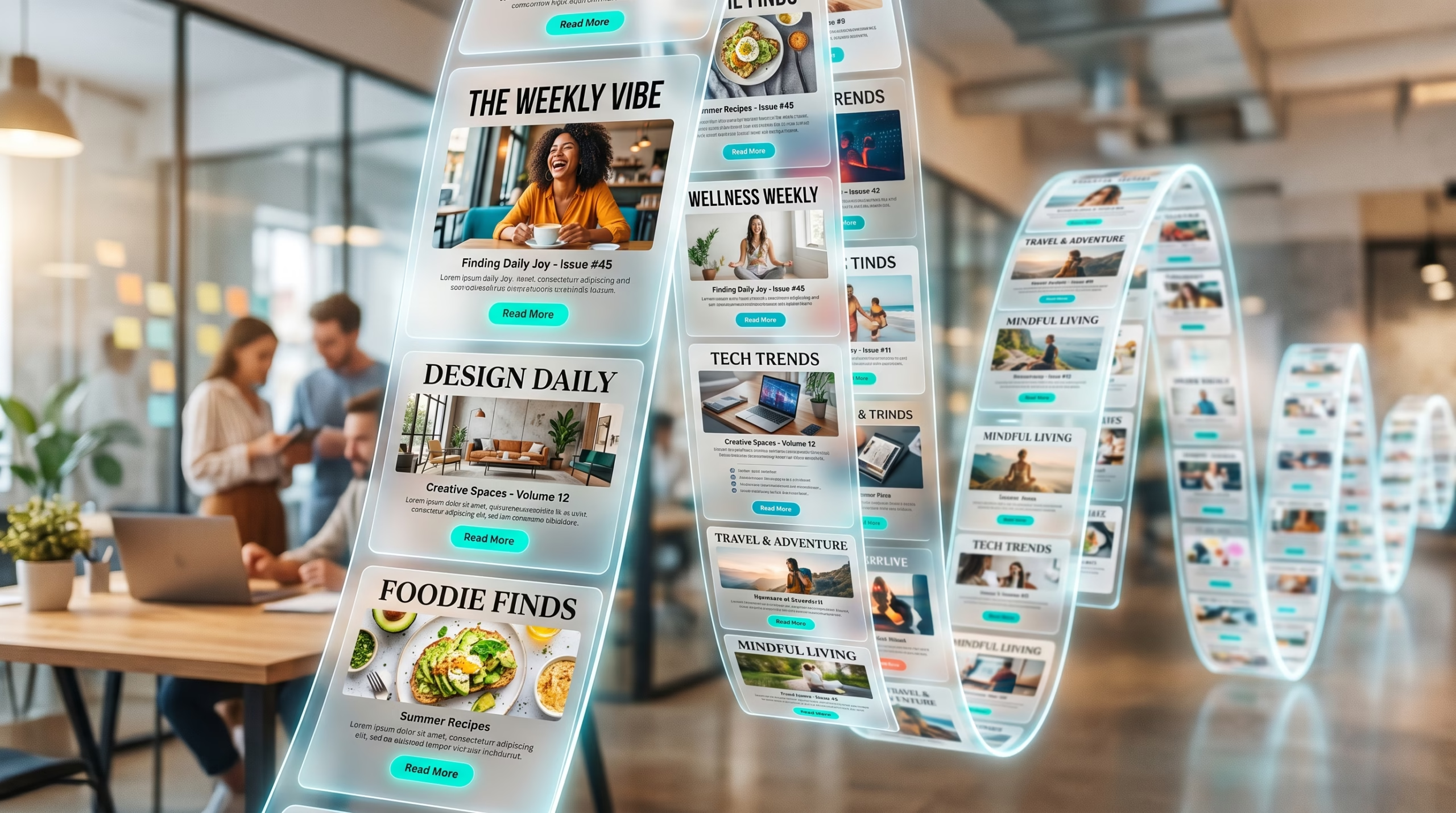
Why Email Newsletters Still Matter in 2026
In a digital Audience world overflowing with social media platforms, AI-generated content, short-form videos, and endless notifications, many marketers wonder whether email newsletters still deserve attention. The answer is a resounding yes. Email remains one of the few marketing channels where you truly own your audience. Algorithms cannot suddenly slash your reach, and platform policy changes cannot cut off access to your subscribers overnight. When someone voluntarily gives you their email address, they are granting permission to enter one of the most personal spaces in the digital world: their inbox.
Table of Contents
The numbers support this reality. Recent industry studies show average email open rates hovering around 43% across industries, while well-run newsletters often exceed 45% engagement. Some newsletter publishers report median open rates approaching 49% depending on audience quality and niche. These figures demonstrate that email remains one of the most effective ways to maintain ongoing relationships with customers, readers, and prospects.
Unlike social media posts that disappear within hours, newsletters create a direct communication channel. Every edition becomes an opportunity to educate, entertain, inspire, or sell. Think of your newsletter as a weekly coffee conversation with your audience. Readers may scroll past hundreds of social media posts daily, but a thoughtfully crafted email often receives far more focused attention.
The real value of email lies not only in visibility but also in trust. Subscribers choose to hear from you. That permission creates a powerful foundation for long-term audience loyalty and business growth.
Understanding What Subscribers Really Want
Many newsletter creators fail because they focus too much on what they want to say rather than what readers want to receive. Successful newsletters start with understanding audience motivations. Every subscriber joins your list for a reason. They may want industry insights, entertainment, practical tips, inspiration, or exclusive opportunities. The moment you stop delivering on that promise, engagement begins to decline.
People subscribe because they expect value. Value doesn’t always mean educational content. Sometimes it’s a compelling story, a fresh perspective, or a sense of belonging to a community. The best newsletters understand that information alone isn’t enough. Readers are looking for connection and relevance.
Consistency plays a major role in building trust. Imagine subscribing to a newsletter that sends emails every Tuesday for three months and then suddenly disappears for six weeks. Readers lose confidence. Predictability creates familiarity, and familiarity builds loyalty. When subscribers know exactly when to expect your content, opening your emails becomes a habit.
Trust grows when newsletters consistently solve problems or improve readers’ lives in some way. Whether you’re teaching business strategies, sharing personal experiences, or delivering industry news, every email should answer one question: “Why should the reader care?” When that answer remains clear week after week, engagement follows naturally.
Creating a Newsletter Strategy That Lasts
One of the biggest mistakes newsletter creators make is launching without a clear strategy. Excitement fuels the first few editions, but sustainability requires planning. Before writing a single email, define the primary purpose of your newsletter. Is it designed to generate leads, build authority, nurture customers, drive sales, or strengthen a community?
Your purpose determines everything else. A newsletter focused on thought leadership will look very different from one designed to promote e-commerce products. Clarity creates consistency, and consistency strengthens brand identity.
Frequency is another crucial decision. Many marketers assume sending more emails automatically produces better results. Reality is more nuanced. Subscribers care less about frequency and more about relevance. A valuable weekly newsletter often outperforms daily emails filled with mediocre content. Research from newsletter publishers indicates that engagement remains strongest when readers develop clear expectations around timing and content delivery.
Creating content pillars can simplify the process. These are recurring themes that appear regularly in your newsletter. For example:
| Content Pillar | Purpose |
|---|---|
| Industry Insights | Educate readers |
| Case Studies | Build credibility |
| Personal Stories | Strengthen connection |
| Actionable Tips | Deliver value |
| Community Highlights | Increase engagement |
With clear pillars in place, generating ideas becomes significantly easier and more sustainable over time.
Crafting Subject Lines That Get Opened
The subject line acts as the front door of your newsletter. No matter how brilliant your content may be, readers must first decide whether your email deserves their attention. That decision often happens in seconds.
Many marketers fall into the trap of writing clever but confusing subject lines. Creativity has its place, but clarity generally wins. Readers want to know what they’re getting before they open the email. Recent email marketing discussions consistently show that simple, direct subject lines frequently outperform overly creative alternatives.
Curiosity remains important, but it must be balanced with honesty. Clickbait subject lines may boost opens temporarily, but they damage trust over time. A strong subject line creates interest without misleading readers about the content inside.
Personalization can also improve performance. Including a subscriber’s name, referencing past behavior, or tailoring content to specific interests can make emails feel more relevant. Modern segmentation tools allow marketers to move beyond generic broadcasts and create personalized experiences at scale.
Subject lines should feel like invitations rather than advertisements. The goal isn’t merely to generate opens. The goal is to attract the right readers who genuinely want the content you’re providing.
Writing Content Readers Actually Enjoy
Once subscribers open your email, the real challenge begins. Attention is fragile. Readers can leave within seconds if the content feels boring, irrelevant, or self-promotional.
Storytelling remains one of the most effective tools for maintaining engagement. Humans are naturally wired to respond to narratives. A simple story can transform ordinary information into memorable experiences. Whether you’re sharing a customer success story, a personal lesson, or an industry example, storytelling creates emotional connections that facts alone cannot achieve.
Actionable value is equally important. Every newsletter should leave readers with something useful. This might be a practical tip, a new perspective, a framework, or a resource they can immediately apply. The most successful newsletters consistently answer the question: “What can I do with this information?”
Tone matters too. Readers generally prefer conversational writing over corporate jargon. Imagine you’re speaking directly to a friend rather than addressing a conference room full of executives. This approach makes content more approachable and engaging.
Remember that inboxes are crowded. According to recent reports, a significant portion of global email traffic is generated by automated systems, making authentic and human-centered communication more valuable than ever. Authenticity helps newsletters stand out in an increasingly automated environment.
Designing for Readability and Retention
Even exceptional content can fail if the presentation makes reading difficult. Design influences how people consume information, especially on mobile devices.
Mobile optimization is no longer optional. Studies indicate that a large percentage of email opens occur on mobile devices. Readers expect clean formatting, short paragraphs, clear headings, and intuitive layouts. Dense walls of text create friction and increase abandonment rates.
Whitespace is one of the most underrated design tools available. It gives content room to breathe and improves readability. Think of whitespace as the silence between musical notes. Without it, everything becomes overwhelming.
Visual elements can enhance newsletters when used strategically. Images, charts, screenshots, and illustrations help break up text and reinforce key messages. However, excessive graphics can distract from the content itself. Balance remains essential.
A good newsletter should guide readers smoothly from beginning to end. Every design decision should support comprehension rather than compete for attention. The best newsletters feel effortless to read because every element serves a purpose.
Advanced Tactics for Audience Loyalty
Building an audience is valuable. Keeping that audience engaged for months or years is where true success happens. Loyalty transforms casual subscribers into devoted readers, customers, and advocates.
Segmentation is one of the most powerful tools for increasing relevance. Instead of sending identical emails to everyone, divide subscribers based on interests, behaviors, demographics, or purchase history. Research consistently shows that targeted campaigns outperform broad email blasts because they align more closely with subscriber needs.
Interactive elements can also strengthen engagement. Polls, surveys, quizzes, feedback requests, and reader questions encourage participation rather than passive consumption. When subscribers actively contribute, they become invested in the newsletter’s success.
Community-building deserves special attention. People stay subscribed not only because of information but because they feel connected to something larger than themselves. Featuring reader stories, sharing audience wins, and highlighting community contributions can transform a newsletter into a thriving ecosystem.
The most successful newsletter creators understand that engagement is a two-way relationship. They listen as much as they communicate. Subscribers who feel heard are far more likely to remain loyal over time.
Measuring Newsletter Success
Measuring performance is essential, but many marketers focus on the wrong metrics. Open rates remain useful indicators, but privacy changes have made them less reliable than in previous years. Industry experts increasingly recommend emphasizing click-through rates, conversions, and revenue-related metrics instead.
Key metrics worth tracking include:
| Metric | Why It Matters |
|---|---|
| Open Rate | Measures initial interest |
| Click-Through Rate | Indicates engagement |
| Click-to-Open Rate | Measures content relevance |
| Conversion Rate | Tracks business outcomes |
| Unsubscribe Rate | Signals audience satisfaction |
| Revenue Per Email | Connects emails to ROI |
Email marketing continues to deliver impressive returns. Recent reports estimate average ROI between $36 and $42 for every dollar invested, making it one of the highest-performing digital marketing channels available.
Testing should become a permanent habit. Experiment with subject lines, send times, content formats, layouts, and calls to action. Small improvements compounded over time can dramatically increase engagement and revenue.
Success isn’t about achieving perfect metrics. It’s about understanding what resonates with your audience and continuously refining your approach.
Conclusion
The art of creating a successful email newsletter is ultimately the art of building relationships. Technology, automation, and analytics all play important roles, but human connection remains the foundation. Subscribers stay engaged when they consistently receive value, trust the sender, and feel understood.
The strongest newsletters don’t chase trends. They focus on delivering meaningful experiences week after week. They respect readers’ time, communicate authentically, and continuously adapt based on feedback and performance data.
As inboxes become more crowded and digital attention grows increasingly scarce, newsletters that prioritize relevance, storytelling, and genuine value will continue to thrive. The goal isn’t simply to get opened. The goal is to become something readers look forward to receiving every single week.
FAQs
1. How often should I send a newsletter?
For most businesses and creators, a weekly newsletter provides the best balance between consistency and quality. The ideal frequency depends on your audience and ability to deliver valuable content consistently.
2. What is considered a good newsletter open rate in 2026?
Many industries see average open rates around 40% to 45%, while highly engaged newsletters can achieve rates exceeding 50%. Performance varies by niche and audience quality.
3. How can I increase newsletter engagement?
Focus on stronger subject lines, audience segmentation, personalized content, storytelling, actionable insights, and consistent delivery schedules. Testing and optimization are also essential.
4. Are email newsletters still effective despite social media growth?
Yes. Email remains one of the most reliable channels because it provides direct access to an owned audience without dependence on changing social media algorithms.
5. Which metric matters most for newsletter success?
While open rates are useful, click-through rates, conversions, subscriber retention, and revenue generated often provide a more accurate picture of overall success.
Thank you 24

1 thought on “Email Newsletters: Keep Audience Engaged”