
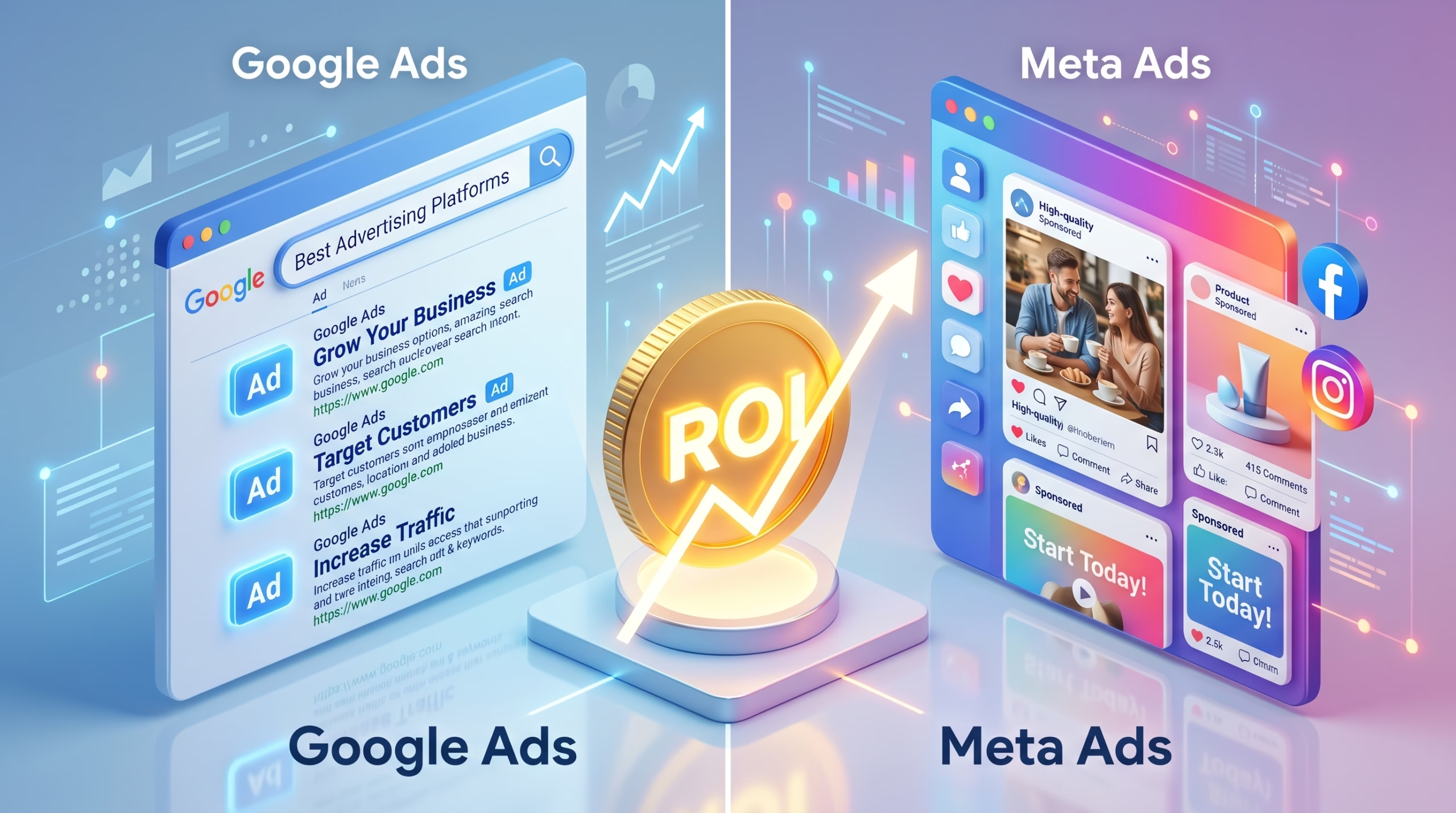
Digital advertising has become more competitive than ever. Businesses are constantly asking the same question: Should I invest in Google Ads or Meta Ads? ROI With marketing budgets under pressure and customer acquisition costs rising, choosing the right advertising platform can make the difference between a profitable campaign and wasted ad spend.
Recent industry reports show that Google and Meta together account for more than half of global digital advertising spending, making them the undisputed giants of online marketing. Google processes billions of daily searches, while Meta’s ecosystem—including Facebook and Instagram—reaches billions of active users worldwide.
Before diving into the article, here’s a structured outline.
Table of Contents
Understanding ROI in Digital Advertising
What ROI Really Means for Advertisers
Return on Investment, commonly known as ROI, is the ultimate scorecard for any advertising campaign. It measures how much revenue your business generates compared to the amount spent on advertising. While many marketers become obsessed with vanity metrics such as likes, shares, and impressions, ROI focuses on what truly matters: profit. Think of ROI as the fuel gauge in your car. You may enjoy driving, but if the tank is empty, you are not getting very far. In advertising, a campaign that generates attention without sales is much like a sports car sitting in a garage—it looks impressive but does not deliver value.
Businesses often confuse ROI with other performance metrics. Click-through rate, cost per click, and conversion rate are important, but they are only pieces of the larger puzzle. True ROI considers revenue generated, customer lifetime value, acquisition costs, and long-term profitability. A campaign with a higher upfront cost may actually generate better ROI if it attracts customers who continue buying for years. Understanding this distinction is critical before comparing Google Ads and Meta Ads because each platform influences the customer journey differently.
Key Metrics That Influence ROI
Several metrics determine advertising success. Cost per click (CPC) measures how much you pay for a visitor. Conversion rate measures how many visitors become customers. Cost per acquisition (CPA) calculates the total cost required to generate a sale or lead. Return on Ad Spend (ROAS) measures revenue generated for every dollar spent. These metrics work together like gears in a machine. If one gear breaks, the entire system becomes less efficient.
Recent benchmark data indicates Google Ads often achieves higher conversion rates due to strong search intent, while Meta Ads frequently provides lower CPCs and broader audience reach. Industry studies show average Google Search conversion rates around 4.2% compared with approximately 1.8% for Meta Ads, though results vary significantly by industry and campaign quality.
What Is Google Ads?
How Google Ads Works
Google Ads is an intent-based advertising platform. Users actively search for products, services, or information, and advertisers bid to appear in front of those searchers. Imagine someone typing “best plumber near me” into Google. That person already has a problem and is looking for a solution. Your advertisement appears at the perfect moment when purchase intent is highest.
The platform includes Search Ads, Display Ads, YouTube Ads, Shopping Ads, and Performance Max campaigns. Each format serves a different purpose, but the common thread is that Google helps advertisers capture existing demand. Instead of convincing someone they need a product, you simply connect with people who are already interested. This intent-driven approach is one of Google’s biggest advantages when it comes to ROI.
Strengths of Google Ads
The biggest strength of Google Ads is buyer intent. Users searching specific keywords are often much closer to making a purchase decision. A person searching “buy running shoes online” is significantly more valuable than someone casually scrolling through social media. This is why Google Ads often generates stronger lead quality and higher conversion rates.
Google also provides unmatched reach through Search, YouTube, Gmail, Maps, and millions of websites within the Display Network. Businesses benefit from sophisticated keyword targeting, automated bidding strategies, and advanced analytics. According to recent market data, Google handles roughly 8.5 billion searches daily, providing advertisers with access to enormous volumes of high-intent traffic.
What Is Meta Ads?
How Meta Ads Works
Meta Ads includes advertising across Facebook, Instagram, Messenger, and the Audience Network. Unlike Google, Meta does not rely primarily on search intent. Instead, it uses demographic, behavioral, and interest-based targeting to place advertisements in front of users who may not yet know they need a product.
Imagine walking through a shopping mall. You are not actively searching for a specific item, but a store display catches your attention. That is essentially how Meta Ads operates. The platform excels at creating demand, introducing products, and influencing consumer behavior before a purchase decision exists.
Strengths of Meta Ads
Meta Ads shines when it comes to audience targeting and visual storytelling. Advertisers can target users based on age, location, interests, behaviors, purchase activity, and lookalike audiences. This precision allows businesses to discover potential customers who might never search for their products on Google.
The platform also excels in creative advertising formats. Video ads, Reels, Stories, carousel ads, and immersive experiences can capture attention quickly. For visually appealing products such as fashion, beauty, home décor, and fitness equipment, Meta Ads often produces exceptional engagement and strong ROAS. Industry reports suggest Meta’s AI-powered Advantage+ campaigns are significantly improving performance and helping drive rapid growth in advertising revenue.
Google Ads vs. Meta Ads Comparison
Audience Intent
The most significant difference between the two platforms is user intent. Google users actively seek information or solutions. Meta users are browsing content and interacting socially. This distinction affects every aspect of campaign performance.
Google captures demand. Meta creates demand. If customers already know they need your product, Google often wins. If customers need education, inspiration, or awareness before purchasing, Meta frequently delivers stronger results. Understanding this difference can save advertisers thousands of dollars in unnecessary spending.
Targeting Capabilities
Meta dominates audience-based targeting. Businesses can build highly specific customer profiles and reach users before competitors even enter the conversation. Google focuses more on keyword intent and contextual relevance, although its audience targeting capabilities continue expanding through AI and first-party data integration.
Neither platform is universally better. Instead, effectiveness depends on your objectives. A luxury fashion brand may thrive on Meta’s visual targeting, while an emergency locksmith service will likely achieve better results through Google’s search-driven ecosystem.
Cost Per Click and Advertising Costs
| Metric | Google Ads | Meta Ads |
|---|---|---|
| Average CPC | Higher | Lower |
| Purchase Intent | Very High | Moderate |
| Audience Reach | Search-Focused | Social Discovery |
| Brand Awareness | Moderate | Excellent |
| Lead Quality | Often Higher | Varies by Industry |
Recent industry comparisons show Meta generally offers lower CPCs, while Google delivers stronger purchase intent and higher conversion efficiency. Businesses must evaluate total acquisition cost rather than focusing solely on click prices.
Conversion Rates
Conversion rates tell an interesting story. Industry benchmarks indicate Google Search campaigns often convert at roughly double the rate of Meta campaigns because users are actively seeking solutions. However, Meta frequently contributes to conversions earlier in the customer journey by building awareness and interest.
This means attribution becomes critical. A customer might discover a brand on Instagram, research it later through Google Search, and finally complete a purchase. If marketers only credit the final click, they may underestimate Meta’s contribution to overall ROI.
ROI Analysis by Business Type
E-commerce Businesses
E-commerce companies often experience strong performance from both platforms. Meta excels at product discovery, especially for visually appealing products. Dynamic product ads, retargeting campaigns, and influencer-style creative can generate substantial sales volume.
Google Shopping Ads and Search campaigns, however, capture customers already comparing products and looking to buy. Recent benchmarks suggest Meta can achieve higher ROAS in certain e-commerce categories such as fashion and beauty, while Google remains dominant for intent-driven product searches.
Local Service Businesses
For local businesses such as plumbers, dentists, attorneys, and HVAC contractors, Google Ads frequently delivers superior ROI. Customers usually search when they need immediate assistance. Search intent is extremely valuable because urgency drives conversions.
Meta Ads can still support local businesses by generating awareness and promoting special offers. Yet when customers need a solution today, they are far more likely to search Google than browse Instagram for answers.
B2B Companies
B2B marketing presents unique challenges because purchase decisions involve research, multiple stakeholders, and longer sales cycles. Google Ads generally performs better because business buyers actively search for software, consultants, and professional services.
Meta Ads can support B2B lead generation through awareness campaigns and retargeting, but direct conversion performance often trails Google’s search-driven model. Many B2B advertisers report stronger lead quality and higher close rates from Google campaigns.
Startups and New Brands
New businesses face a different challenge: nobody knows they exist. In this scenario, Meta Ads can be extremely valuable because it introduces products to new audiences. Startups often need visibility before they can benefit from search demand.
Meta’s lower costs and advanced audience targeting make it easier to build brand recognition quickly. Once awareness increases, Google Ads becomes more effective because users begin actively searching for the brand.
When Google Ads Delivers Better ROI
Google Ads typically generates stronger ROI when:
- Customers actively search for solutions.
- Products solve urgent problems.
- Lead quality matters more than volume.
- Businesses operate in local service industries.
- B2B lead generation is the primary goal.
Because Google captures users near the bottom of the sales funnel, conversions often occur faster. Many advertisers report more predictable customer acquisition costs and stronger purchase intent compared with social advertising platforms.
When Meta Ads Delivers Better ROI
Meta Ads often outperforms Google when:
- Visual storytelling influences purchases.
- Brand awareness is a major objective.
- Products appeal to impulse buyers.
- Businesses need large-scale audience reach.
- Customer discovery is more important than immediate conversion.
Meta excels at creating emotional connections. A compelling video ad can inspire someone to purchase something they never intended to buy. This ability to generate demand is one of Meta’s greatest strengths.
The Power of Combining Both Platforms
Many businesses frame Google Ads versus Meta Ads as a battle. The reality is that the highest-performing marketing strategies often combine both platforms. Meta introduces the brand, nurtures interest, and expands reach. Google captures demand when users begin actively researching solutions.
Industry analyses increasingly show that integrated campaigns frequently outperform single-platform strategies. Meta fills the top of the funnel, while Google converts high-intent prospects at the bottom. Together, they create a powerful customer acquisition system.
Imagine a relay race. Meta runs the first leg by generating awareness. Google takes the baton and finishes the race by converting prospects into customers. Separately, each platform is powerful. Together, they become remarkably effective.
Common Mistakes That Destroy ROI
One of the biggest mistakes advertisers make is choosing a platform based solely on popularity rather than business objectives. Another common error is focusing exclusively on last-click attribution. This approach often undervalues awareness campaigns and creates misleading ROI calculations.
Poor creative quality, weak landing pages, inadequate audience targeting, and insufficient testing also reduce profitability. Successful advertisers constantly experiment with messaging, bidding strategies, and audience segmentation. Advertising is not a set-it-and-forget-it activity. It requires ongoing optimization and data-driven decision-making.
Future Trends in Advertising ROI
Artificial intelligence is reshaping both Google Ads and Meta Ads. Automated bidding, audience expansion, predictive targeting, and AI-generated creative are becoming standard features. Google’s Performance Max campaigns and Meta’s Advantage+ solutions demonstrate how automation is transforming campaign management.
The future belongs to advertisers who embrace first-party data, advanced attribution models, and cross-platform marketing strategies. As privacy regulations continue evolving, businesses that build direct customer relationships will gain a significant competitive advantage.
Conclusion
The answer to the question, “Google Ads vs. Meta Ads: Which platform yields the best ROI?” depends entirely on your business model, audience, and objectives.
If your customers are actively searching for solutions, Google Ads usually delivers the strongest ROI because it captures existing demand and converts high-intent users. If your goal is brand awareness, audience growth, and product discovery, Meta Ads often provides exceptional value through its sophisticated targeting and creative capabilities.
For many businesses, the real winner is not Google Ads or Meta Ads alone. The highest ROI frequently comes from using both platforms strategically. Meta creates awareness, Google captures demand, and together they form a complete marketing ecosystem capable of generating sustainable growth.
FAQs
1. Which platform is cheaper, Google Ads or Meta Ads?
Meta Ads generally offers lower cost-per-click rates, while Google Ads often costs more due to higher competition and stronger purchase intent. The cheapest platform is not always the most profitable.
2. Which platform is better for e-commerce?
Both platforms work well for e-commerce. Meta excels at product discovery and retargeting, while Google Shopping and Search campaigns capture ready-to-buy customers.
3. Are Google Ads better for local businesses?
In many cases, yes. Local service providers often benefit from Google Search because customers actively seek nearby solutions.
4. Can I use Google Ads and Meta Ads together?
Absolutely. Many successful businesses use Meta for awareness and Google for conversion-focused campaigns.
5. Which platform offers higher conversion rates?
Industry benchmarks consistently show Google Search achieving higher average conversion rates due to stronger user intent. Meta often contributes earlier in the customer journey and supports overall conversions through awareness and engagement.

1 thought on “Google Ads vs. Meta Ads: Which Platform Yields the Best ROI?”