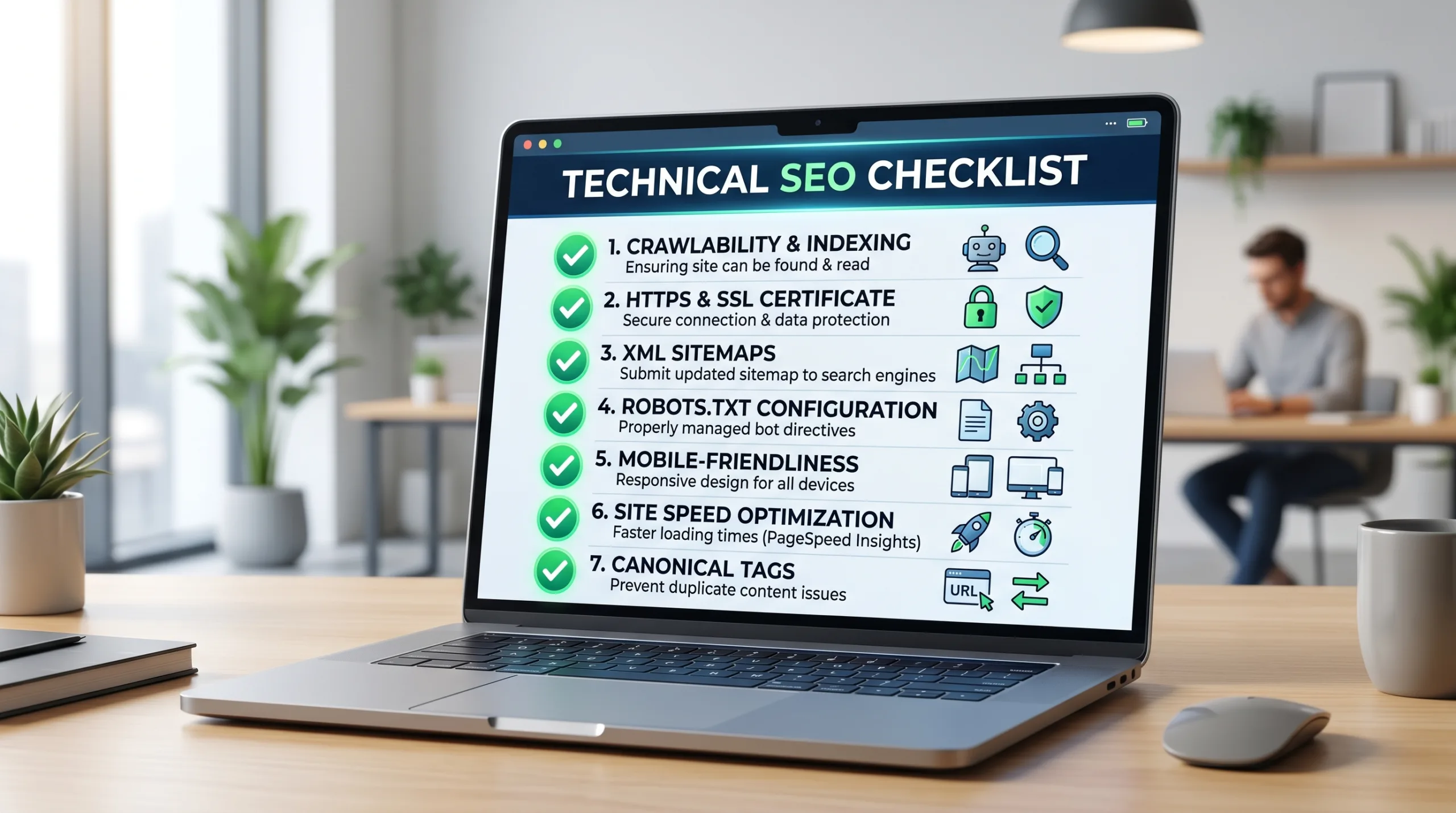
Technical SEO is often compared to the foundation of a house. You can have beautiful walls, expensive furniture, and eye-catching decorations, but if the foundation is weak, the entire structure becomes unstable. The same principle applies to websites. You can publish outstanding content and build strong backlinks, but if search engines struggle to crawl, understand, or index your pages, your rankings can suffer significantly.
Recent SEO studies show that nearly 60% of websites have at least one critical technical SEO issue that affects search performance. Research also indicates that only around 42% of websites currently pass all Core Web Vitals benchmarks, highlighting how widespread technical problems remain across the web.
This article explores seven practical technical SEO tweaks that can quickly improve your website’s visibility. These improvements are not complicated enterprise-level projects. They are actionable optimizations that website owners, bloggers, affiliate marketers, and businesses can implement to strengthen their search presence.
Table of Contents
Why Technical SEO Matters More Than Ever
Search engines have become incredibly sophisticated. Modern ranking systems do much more than analyze keywords and backlinks. They evaluate how quickly pages load, whether content is accessible on mobile devices, how efficiently a website can be crawled, and whether technical signals align correctly. This means technical SEO has become a critical component of search visibility.
Think about search engines as librarians managing billions of books. If your book has missing pages, confusing chapter titles, or no entry in the catalog, it becomes difficult to find. Technical SEO acts as the cataloging system that helps search engines locate, understand, and organize your content efficiently.
The rise of AI-powered search experiences has made technical optimization even more important. Search engines and AI systems rely heavily on structured, accessible, and well-organized content. Websites with poor technical foundations may struggle to earn visibility even if their content quality is excellent. Studies from recent technical SEO audits show that crawlability, indexing, and page experience remain among the most common reasons websites lose rankings.
The Link Between Technical SEO and Rankings
Technical SEO does not replace content quality or backlinks. Instead, it amplifies them. When your website loads quickly, provides clear indexing signals, and offers a seamless user experience, search engines can process your content more effectively.
A technically optimized site also improves user satisfaction. Visitors stay longer, engage more deeply, and are more likely to convert. These positive signals can indirectly support search performance over time.
Tweak #1 – Improve Core Web Vitals
Core Web Vitals remain one of the most important technical SEO factors. These metrics measure real-world user experience and focus on loading speed, responsiveness, and visual stability.
According to recent industry data, only 42% of websites successfully pass all Core Web Vitals requirements. The median load time among top-ranking pages is approximately 1.65 seconds, demonstrating how strongly performance correlates with visibility.
The three primary Core Web Vitals include:
| Metric | Purpose | Recommended Target |
|---|---|---|
| LCP | Loading performance | Under 2.5 seconds |
| INP | User interaction responsiveness | Under 200ms |
| CLS | Visual stability | Under 0.1 |
Speed Metrics That Matter
Website speed impacts both users and search engines. Slow websites often experience higher bounce rates and lower engagement. If visitors abandon your page before it loads, your content never has a chance to perform.
Several actions can significantly improve performance:
- Compress images before uploading.
- Use modern image formats.
- Enable browser caching.
- Reduce unnecessary plugins.
- Implement a content delivery network (CDN).
- Minimize JavaScript execution.
A faster website creates a smoother experience while making crawling more efficient for search engines.
Tweak #2 – Fix Crawlability Issues
If search engines cannot access your content, rankings become impossible regardless of quality. Crawlability determines whether search engine bots can navigate your website effectively.
Many websites accidentally block important pages through incorrect robots.txt settings or broken internal structures. Technical audits frequently uncover crawl issues that have been hidden for months or even years.
Optimizing Robots.txt
Your robots.txt file serves as a set of instructions for search engine crawlers. A simple mistake can prevent valuable content from being discovered.
Review your robots.txt file and ensure:
- Important pages are accessible.
- CSS and JavaScript resources are not blocked.
- Development folders remain restricted.
- Sitemap locations are included.
A properly configured robots.txt file helps search engines focus on your most important content.
Tweak #3 – Submit and Maintain XML Sitemaps
An XML sitemap acts like a roadmap for search engines. It tells crawlers which pages deserve attention and helps them discover new content faster.
Search Console experts consistently recommend maintaining updated XML sitemaps because they improve content discovery and indexing efficiency. Established websites often see faster indexing when sitemap management is handled correctly.
Common Sitemap Mistakes
Many website owners generate a sitemap once and never review it again. This can create several issues:
- Broken URLs remain listed.
- Redirected pages stay included.
- Noindex pages appear accidentally.
- Duplicate URLs waste crawl resources.
Your sitemap should contain only valid, indexable pages that provide value to users and search engines.
Tweak #4 – Optimize Indexing Signals
Getting crawled is only half the battle. Search engines must also understand which pages belong in their index.
Indexing problems are surprisingly common. Many websites lose visibility because of conflicting technical signals such as incorrect canonical tags, accidental noindex directives, or duplicate content issues.
Canonical Tags and Noindex Errors
Canonical tags help search engines determine the preferred version of a page. Without them, duplicate content can dilute ranking signals.
Review your site for:
- Self-referencing canonical tags.
- Duplicate URLs.
- Accidental noindex tags.
- Conflicting indexing instructions.
Google Search Console remains one of the most effective tools for identifying indexing problems before they become major traffic losses.
Tweak #5 – Strengthen Internal Linking
Internal links are often underestimated. They guide users through your website while helping search engines understand content relationships.
Imagine your website as a city. Internal links function as roads connecting neighborhoods. Without roads, visitors and search engines struggle to navigate.
Eliminating Orphan Pages
Orphan pages have no internal links pointing toward them. Search engines may discover these pages eventually, but they receive weaker authority signals and often perform poorly.
To improve internal linking:
- Link related articles together.
- Use descriptive anchor text.
- Connect important pages from high-authority content.
- Create topic clusters.
SEO professionals frequently identify weak internal linking as one of the most overlooked technical issues during audits.
Tweak #6 – Implement Structured Data
Structured data helps search engines understand your content more clearly. It provides machine-readable context that can improve how your pages appear in search results.
Schema markup can support rich snippets, FAQ displays, breadcrumbs, review stars, and other enhanced search features. Technical SEO checklists consistently include schema implementation among high-impact optimizations.
Schema Types That Help Visibility
Several schema types provide strong SEO benefits:
| Schema Type | Best Use |
|---|---|
| Article | Blog posts |
| FAQ | Frequently asked questions |
| Breadcrumb | Site navigation |
| Product | Ecommerce pages |
| Review | Ratings and testimonials |
Structured data does not guarantee rich results, but it significantly improves eligibility for enhanced search features.
Tweak #7 – Secure and Mobile-Friendly Architecture
Modern SEO requires security and mobile usability. Search engines prioritize websites that provide safe browsing experiences and function well on smartphones.
Industry research indicates that over 95% of top-ranking pages use HTTPS security protocols.
Mobile-First SEO Essentials
Google’s mobile-first indexing means the mobile version of your site receives primary consideration during evaluation.
Key mobile optimization areas include:
- Responsive design.
- Readable font sizes.
- Touch-friendly buttons.
- Fast mobile loading times.
- Proper image scaling.
Mobile users now represent the majority of internet traffic. A poor mobile experience can negatively affect rankings and conversions simultaneously.
Technical SEO Tools for Faster Audits
Technical SEO becomes much easier when you use the right tools. Several platforms can quickly identify problems before they affect performance.
Popular options include:
| Tool | Primary Purpose |
|---|---|
| Google Search Console | Indexing and coverage reports |
| Screaming Frog | Technical site crawling |
| PageSpeed Insights | Performance analysis |
| Ahrefs | Site audits and backlinks |
| Semrush | Comprehensive SEO audits |
Technical crawlers help uncover broken links, duplicate content, redirect chains, indexing issues, and metadata problems before they become major obstacles.
Conclusion
Technical SEO is not about chasing complicated algorithms. It is about creating a website that search engines can crawl, understand, and trust. These seven tweaks provide some of the fastest and most effective ways to improve visibility without rewriting your entire content strategy.
Improving Core Web Vitals, fixing crawlability problems, maintaining clean XML sitemaps, optimizing indexing signals, strengthening internal linking, implementing structured data, and ensuring mobile-friendly security standards can create measurable gains in search performance.
Many website owners spend months creating content while ignoring technical foundations. The reality is simple: even outstanding content struggles when technical barriers stand in its way. By addressing these seven areas, you build a stronger foundation for every SEO effort that follows.
FAQs
1. What is technical SEO?
Technical SEO refers to optimizing the infrastructure of a website so search engines can crawl, index, and understand content efficiently.
2. How often should I perform a technical SEO audit?
Most websites benefit from a full technical audit every quarter and after any major website redesign or migration.
3. Which technical SEO factor has the biggest impact?
There is no single factor. Crawlability, indexing, site speed, and mobile usability often deliver the largest improvements when problems exist.
4. Can technical SEO improve rankings quickly?
Yes. Fixing major crawl errors, indexing issues, or performance bottlenecks can produce noticeable visibility improvements within weeks.
5. Do small websites need technical SEO?
Absolutely. Technical SEO benefits websites of all sizes. Even small blogs can lose rankings due to indexing mistakes or poor site performance.
Thank you 24